Free Webinar:
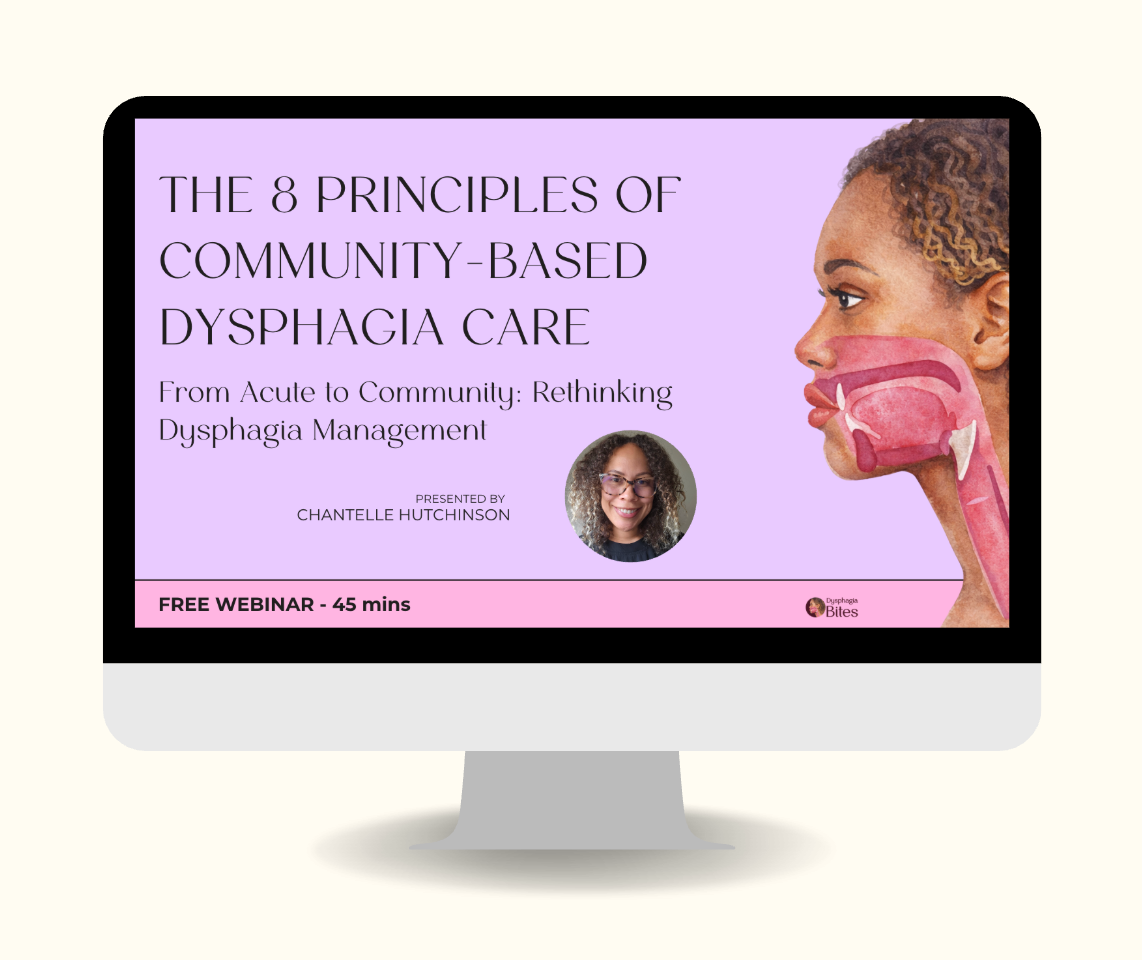
The 8 Principles of Community-Based Dysphagia Care
Most of us were trained to manage dysphagia through an acute care lens: identify the problem, scope (or x-ray) it, modify the diet, eliminate the risk.
That works in a hospital. Not so much in someone's lounge room.
I really learned the nuance of community-based dysphagia care when I landed in new role and saw my first adult client with a developmental disability. This young man had cerebral palsy and a severe intellectual disability, he was on a puree diet and moderately thickened fluids, and I very quickly realised that none of my "go-to" tools applied. No cranial nerve exam. No standardised assessment that made sense. Just a set of idiosyncratic behaviours I'd never been taught to interpret or document.
I learnt on the job, through lots of trial and error and I was lucky enough to eventually find an amazing mentor.
But that moment (and years of community practice since) led me to identify 8 acute care assumptions we've all inherited, and the 8 principles that should replace them when we're working with clients at home, in group homes, in aged care, in the community.
Details:
Monday 3rd August
12-12:45pm AEST
Free
Register Now
Join me online for this free webinar
00
DAYS
00
HOURS
00
MINS
00
SECS
I'll walk you through:
- Why the CSE isn't a "lesser" assessment in the community and should in fact, be considered the gold standard for some populations
- Why "everyone needs an instrumental" isn't realistic or always clinically indicated
- How to think about least restrictive intervention before reaching for modified textures
- Why goal-setting looks completely different for chronic, progressive, and lifelong dysphagia
- Why carer involvement isn't a nice-to-have, it's often the difference between a plan that works and one that doesn't
- Why VFSS results alone shouldn't dictate diet and fluid recommendations in the community
Who this is for:
- SLPs working in community rehab, aged care, disability services, or home visiting roles
- New grads who were taught dysphagia exclusively through an acute care lens (so... most of us)
- Experienced clinicians transitioning from acute into the community or who've felt that nagging sense that "the textbook approach" doesn't fit their caseload, and want the language and frameworks to explain why
About the Presenter
Chantelle is a Speech Pathologist with over 15 years' experience working with adults with dysphagia across inpatient rehabilitation, outpatient clinics, and home-based practice. Her clinical focus is community-based dysphagia management, and all of her courses & resources are built around this.
Chantelle is the founder of Dysphagia Bites, an evidence-informed education platform for SLPs, and host of the podcast Dysphagia Research Bites. She guest lectures at La Trobe University to present on acquired social communication impairments post TBI and has completed additional dysphagia training including the McNeill Dysphagia Therapy Program (MDTP certified), the Dysphagia Disorders Survey (DDS-DMSS certified), a 12-day intensive dysphagia course led by Prof Maggie-Lee Huckabee, and she is currently completing MBSImP certification.
Chantelle first had the idea of creating the Dysphagia Bites Education Hub while she was leading a team of 15 speech pathologists in a community setting. Where it became apparent that speech pathologists did not have access to dysphagia training and education that fit their setting.
Register Now